Top companies trust Zapier to automate work that solves their unique business problems—no coding required.
How Zapier works
Zapier makes it easy to integrate Mailchimp with WordPress - no code necessary. See how you can get setup in minutes.
100%
Help
Mailchimp
Mailchimp
1. Choose trigger event
WordPress
WordPress
2. Choose action
1. Select the event
Setup
Test
Mailchimp
Choose a trigger event
Choose a trigger
A trigger is the event that starts your Zap—like a "New Campaign" from Mailchimp.
Add your action
An action happens after the trigger—such as "Upload Media" in WordPress.
You’re connected!
Zapier seamlessly connects Mailchimp and WordPress, automating your workflow.
Supported triggers and actions
Zapier helps you create workflows that connect your apps to automate repetitive tasks. A trigger is an event that starts a workflow, and an action is an event a Zap performs.
Create a new record or update an existing record in your app.
Email
Required
Username
Required
Password
Required
First_name
Last_name
Name
Nickname
Description
Website
Role
Action
This is an event a Zap performs.
Write
Create a new record or update an existing record in your app.
Stop on error
Required
HTTP Method
Required
URL
Required
Query string parameters
Additional request headers
Body
Action
This is an event a Zap performs.
Write
Create a new record or update an existing record in your app.
Copy_search_keyword
Search Keyword
Required
Action
This is an event a Zap performs.
Search
Find existing data in your app
For AI agents & developers
Use Mailchimp and WordPress with AI agents and code
Beyond Zap workflows. Call Mailchimp and WordPress actions directly from your AI client or your codebase, using the same 9,000+ app integrations Zapier already runs.
No code
Connect via Zapier MCP
Expose Mailchimp and WordPress actions as tools in any MCP client. Authenticate once, then call them in natural language.
Example actions on this page
Archive Subscriber
Upload Media
Works with
Claude · ChatGPT · Cursor · any MCP-compatible client
There is no Python package yet. SDK is TypeScript-only (@zapier/zapier-sdk). The MCP server URL is personal to your account; get it at zapier.com/mcp.
Zapier is the automation platform of choice for 87% of Forbes Cloud 100 companies in 2023
93%
Customers who say using Zapier has made them better at their job
25m
Customers have created over 25 million Zaps on the platform
6 mins
The average user takes less than 6 minutes to set up a Zap
Practical ways you can use Mailchimp and WordPress
Archive blog commenters who unsubscribe from mailing list.
If a blog commenter also subscribes to your newsletter and they unsubscribe, it could be worth archiving them from your WordPress environment to keep records up-to-date. Zapier can automate this by archiving a WordPress user whenever they unsubscribe from a Mailchimp audience.
Remove WordPress user after unsubscribing Mailchimp.
When a user unsubscribes from a Mailchimp email audience, they could be automatically removed from your WordPress users list. Zapier bridges the gap between these two tools while enhancing data security.
When you send a new campaign through Mailchimp, generate a WordPress post featuring the campaign content. Zapier ensures that your email campaigns can also attract audiences organically through your website, reducing effort spent cross-posting marketing materials.
Learn how to automate Mailchimp on the Zapier blog
Learn how to automate WordPress on the Zapier blog
Make work flow with AI
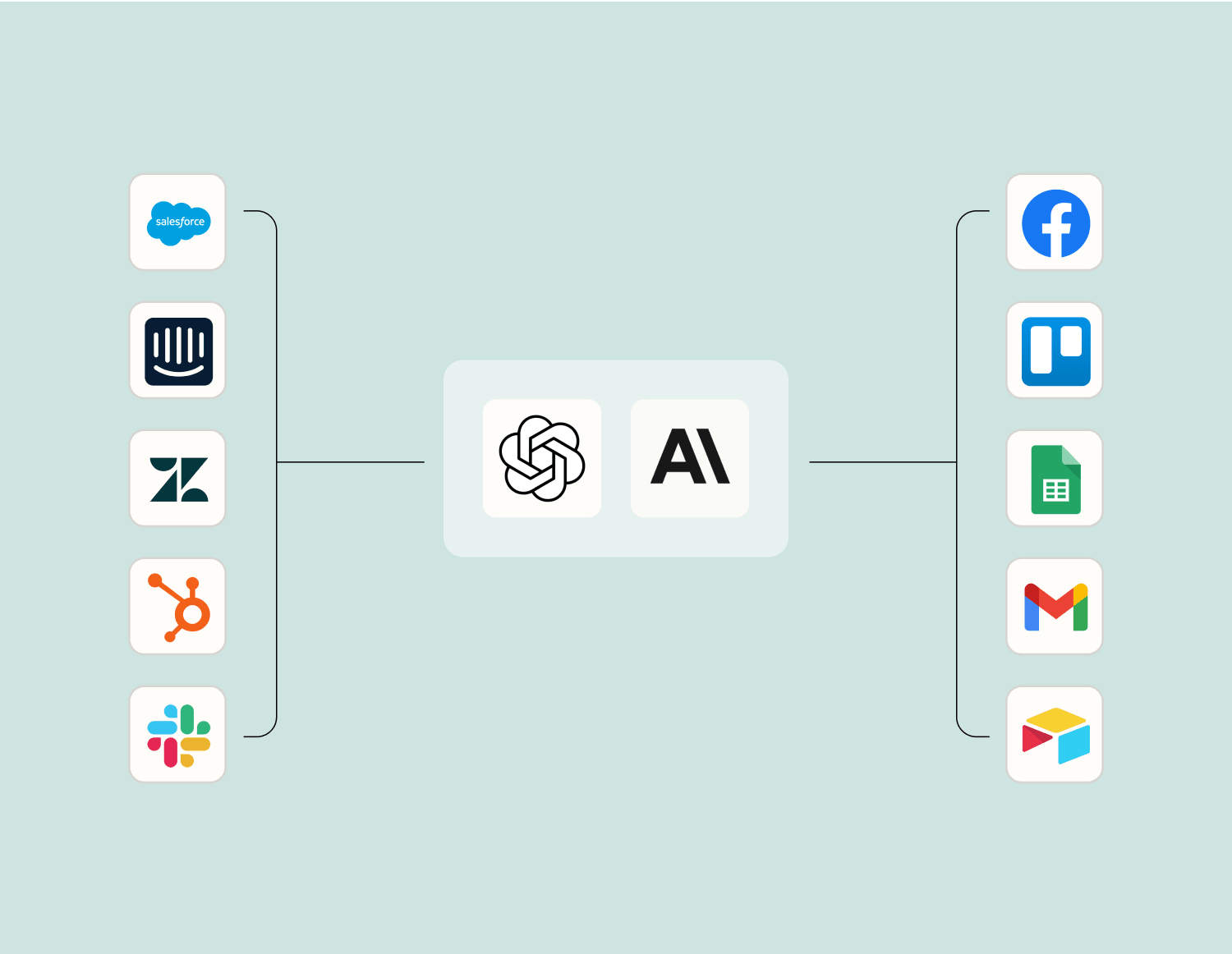
Level up your Mailchimp to WordPress integration with AI. Extract, summarize, and transform your integration data with leading AI models like OpenAI, Anthropic, and more.
Frequently Asked Questions about Mailchimp + WordPress integrations
New to automation with Zapier? You're not alone. Here are some answers to common questions about how Zapier works with Mailchimp and WordPress
What is the process for integrating Mailchimp with WordPress?
Integrating Mailchimp with WordPress involves installing a Mailchimp plugin on your WordPress site. Once installed, you can connect your Mailchimp account through the API key provided by Mailchimp and start syncing your data.
Can I automate sending a newsletter when I publish a new blog post on WordPress?
Yes, you can set up an automated workflow that triggers a campaign in Mailchimp whenever a new blog post is published on your WordPress site. This requires configuring specific triggers and actions within your integration settings.
How do I add a signup form to my WordPress site using Mailchimp?
To add a signup form, use the Mailchimp block in the WordPress editor or customize it via a plugin. This action allows visitors to subscribe directly from your site, automatically syncing their details with your Mailchimp audience.
Is it possible to segment my audience based on interactions with my WordPress site?
Yes, you can segment your audience in Mailchimp based on user interactions tracked through plugins or custom configurations. For instance, creating tags or groups based on page visits or specific actions taken can influence targeted campaigns.
What triggers are available for automating responses in Mailchimp from WordPress actions?
We offer various triggers such as form submissions, page visits, or product purchases (if using WooCommerce). Each of these can trigger actions in Mailchimp like sending automated emails or updating contact profiles.
How do I ensure my data stays synchronized between Mailchimp and WordPress?
Maintaining synchronization is usually handled by the plugin itself. Regular checks ensure that subscriber information and campaigns reflect any updates made via either platform.
Are there any limitations when integrating Mailchimp with WordPress?
While most functions are seamless, some limitations may arise from API restrictions or plugin capabilities. However, we regularly update our integrations to minimize these limitations and enhance functionality.
About Mailchimp
Mailchimp is an email and marketing automation platform built for growing businesses. Turn email and SMS into revenue.
WordPress is web software you can use to create a beautiful website or blog. Nearly 20% of the top 10 million websites and over 60 million people have chosen WordPress to power the place on the web they call "home".